AI Basics for Builders: A Practical Mental Model
A no-nonsense map for shipping AI features that survive real users, constraints, and messy context.
- AI Basics
- Product
- Execution
The fastest way to fail with AI is to treat it like a feature category instead of a behavior change system.
If you remember one line, remember this:
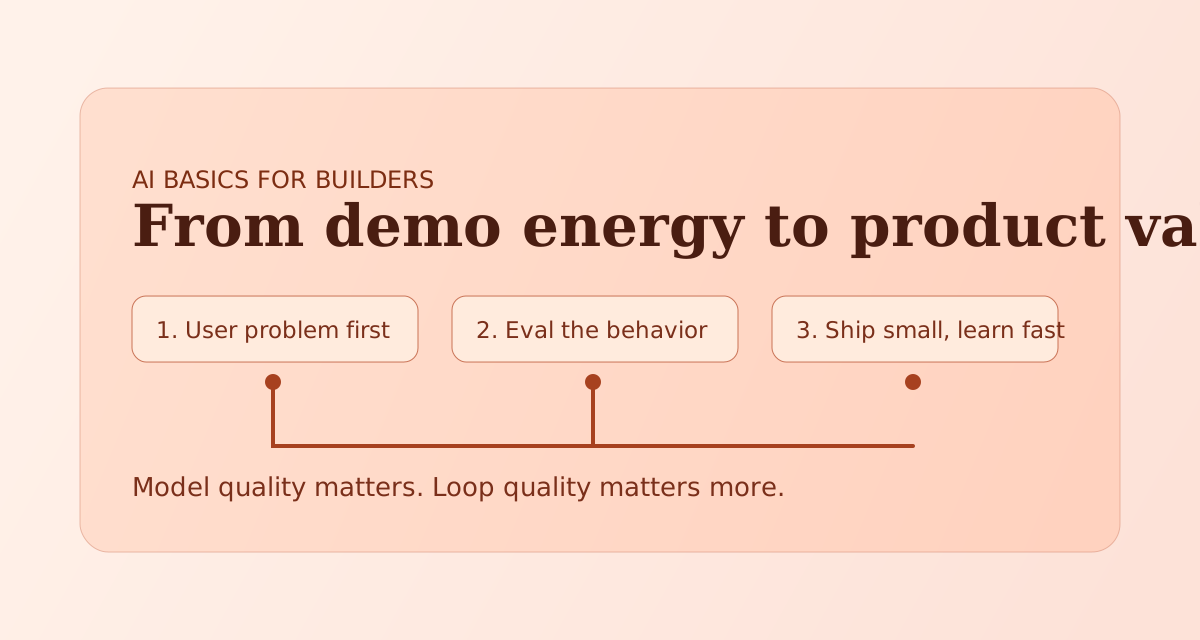
Model quality matters. Loop quality matters more.
The stack that actually matters
Most teams obsess over model selection early. That is understandable, but usually premature.
A better order:
- User problem clarity
- Interaction loop quality
- Evaluation and observability
- Model/provider optimization
If your first three are weak, model upgrades mostly create better demos.
What AI is doing in product terms
At product level, AI is usually doing one (or more) of these jobs:
- Compression: summarize, organize, simplify
- Transformation: rewrite, translate, restructure
- Generation: draft, propose, ideate
- Decision support: rank options, compare tradeoffs
- Automation: execute workflows with constraints
Name the job first. Then design UX and evals around that job.
The 5 failure patterns I keep seeing
-
Blank chat UX for everything Users don’t know what “good input” looks like.
-
No explicit output contract Teams ask for “something useful” and then argue about quality after the fact.
-
No failure-mode design What should happen when confidence is low? Most products have no answer.
-
No instrumentation of user outcomes You track token counts but not user completion.
-
Scope explosion in v1 Trying to solve 8 jobs in one feature creates fragile UX and unclear signals.
A lightweight way to scope AI features
Before writing code, fill this in:
- Primary job: What single job is this feature responsible for?
- Input quality range: What do we expect users to provide?
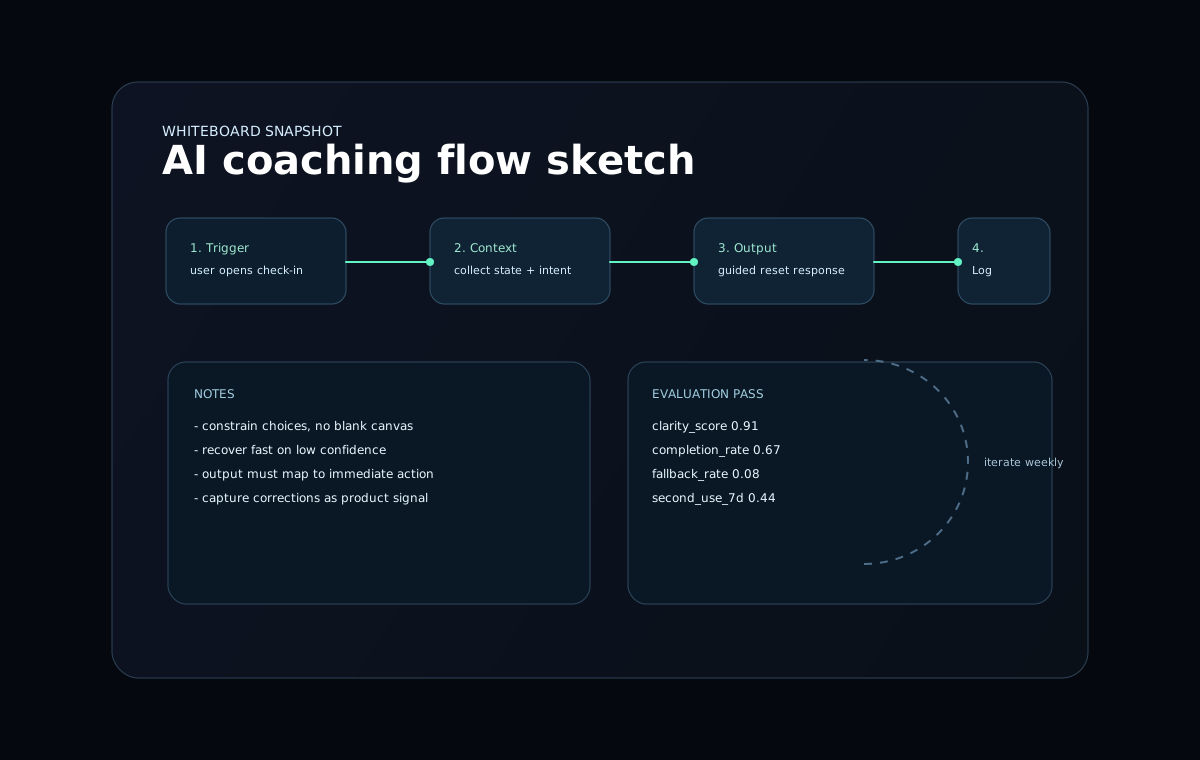
- Output contract: What structure and quality bar are required?
- Failure response: How should the system degrade?
- Success metric: What repeated behavior proves value?
If any of these are vague, your launch risk is high.
My default launch strategy
I like a “narrow but complete” first slice:
- One user segment
- One workflow
- One measurable success loop
- One fallback path for bad generations
This does two things:
- makes quality tuning tractable
- produces interpretable learning data quickly
Bottom line
You do not ship AI value by adding model calls. You ship AI value by designing trustworthy loops people repeat.
That is the game.