The GPT-3.5 to GPT-4 Inflection Point
Why the November 2022 and March 2023 model moments still define product quality bars in 2026.
- GPT-3.5
- GPT-4
- AI History
- Product Strategy
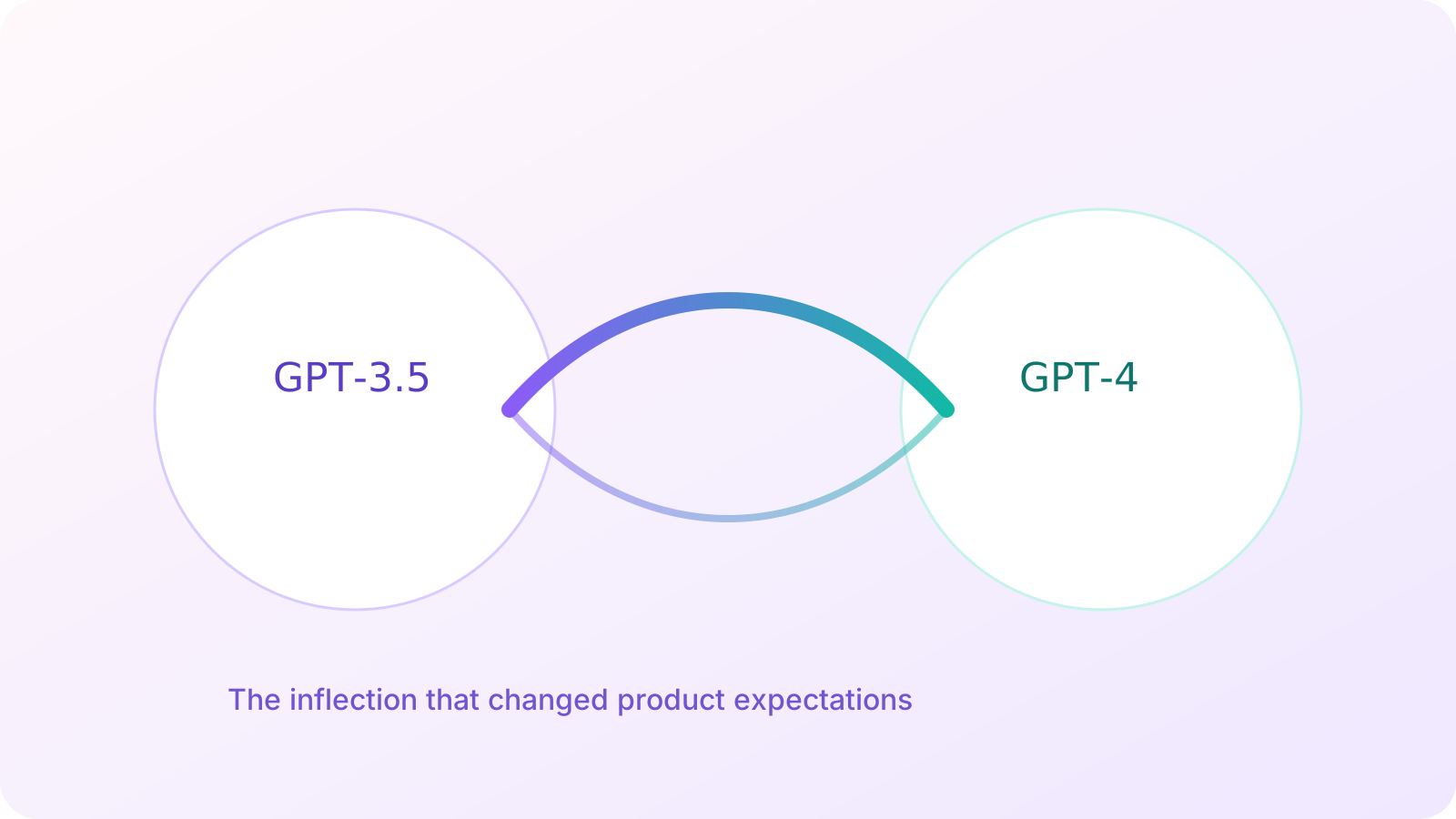
The public AI timeline did not move in smooth increments. It moved in jumps.
Two dates still matter:
- November 30, 2022: ChatGPT shipped on GPT-3.5.
- March 14, 2023: GPT-4 launched.
Most teams still underestimate what changed between those two moments.
What GPT-3.5 changed
GPT-3.5 made language interfaces mainstream overnight. The key unlock was not perfect answers. It was conversational usability at scale.
For product builders, that changed three assumptions:
- Users would tolerate probabilistic outputs if the UX was fast and legible.
- Writing quality became a core product surface, not just a model artifact.
- “Good enough” assistants could create daily habits even with visible flaws.
What GPT-4 changed
GPT-4 raised the floor for reasoning-heavy tasks and long-context synthesis. This is where many teams learned a hard lesson: upgrading model quality does not fix weak product design.
The teams that won were the ones that paired better models with:
- tighter prompts,
- explicit response formats,
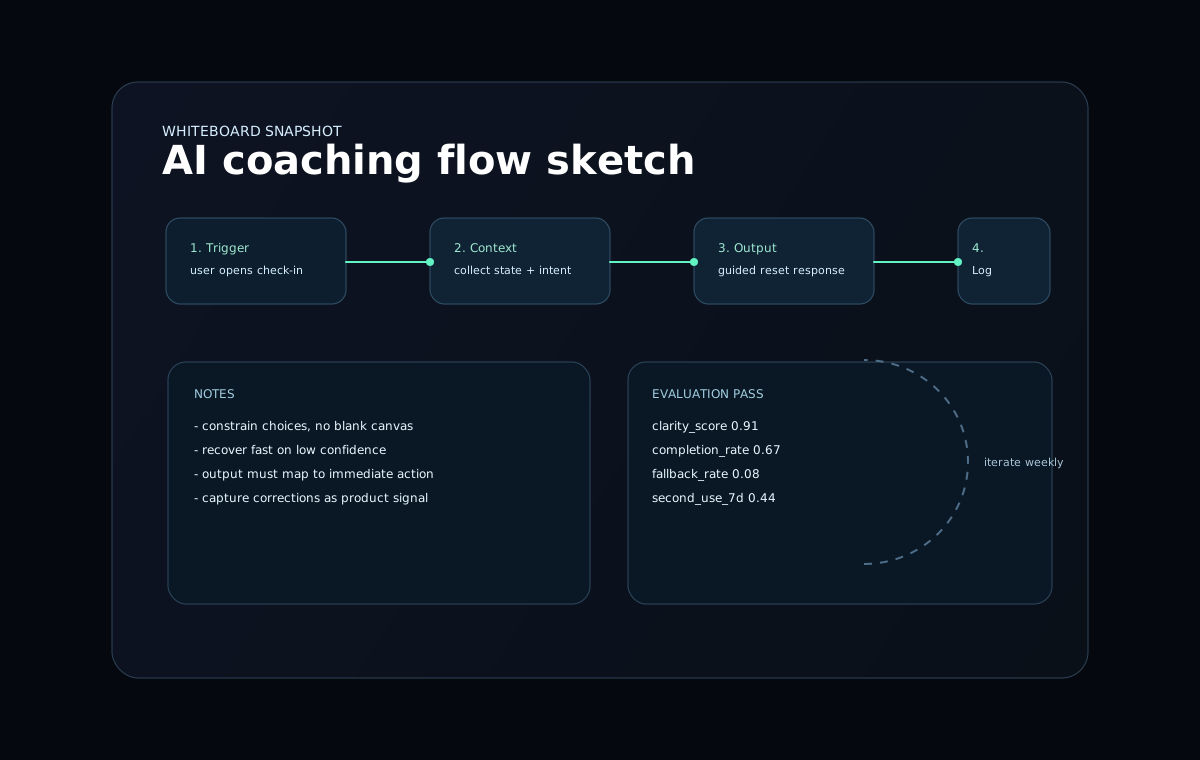
- guardrails and recovery flows,
- and real usage instrumentation.
The pattern that still repeats
Every major release since then follows a familiar cycle:
- Demo shock.
- Over-promising by product teams.
- Reliability pain in production.
- A new wave of disciplined builders who add constraints and eval loops.
The core mistake is always the same: treating model capability as a product strategy.
Practical takeaway in 2026
When a new model drops, I run the same checklist before touching roadmap scope:
| Question | Why it matters |
|---|---|
| Does this reduce user effort in an existing workflow? | Prevents novelty-driven detours |
| What error class does it actually improve? | Forces measurable claim |
| What fallback is now required? | Better models can still fail badly |
| Does this unlock a simpler UI? | UX simplification is often the real value |
If we cannot answer these in one meeting, we do not expand scope.
Bottom line
GPT-3.5 and GPT-4 were not just model milestones. They reset user expectations for speed, fluency, and usefulness.
The lesson was never “just use the latest model.” The lesson was: model jumps reward teams that can redesign the whole loop quickly.