Reinforcement Learning: Why It Matters Again
A practical explanation of RL and RLHF, and why reinforcement ideas are back at the center of AI product quality.
- Reinforcement Learning
- RLHF
- Alignment
- Product Quality
People hear “RL” and think robotics or game bots. That is part of the story, but not the whole story for modern AI products.
The short version:
Supervised learning teaches a model what to say. Reinforcement learning teaches it what gets rewarded over time.
RL in plain language
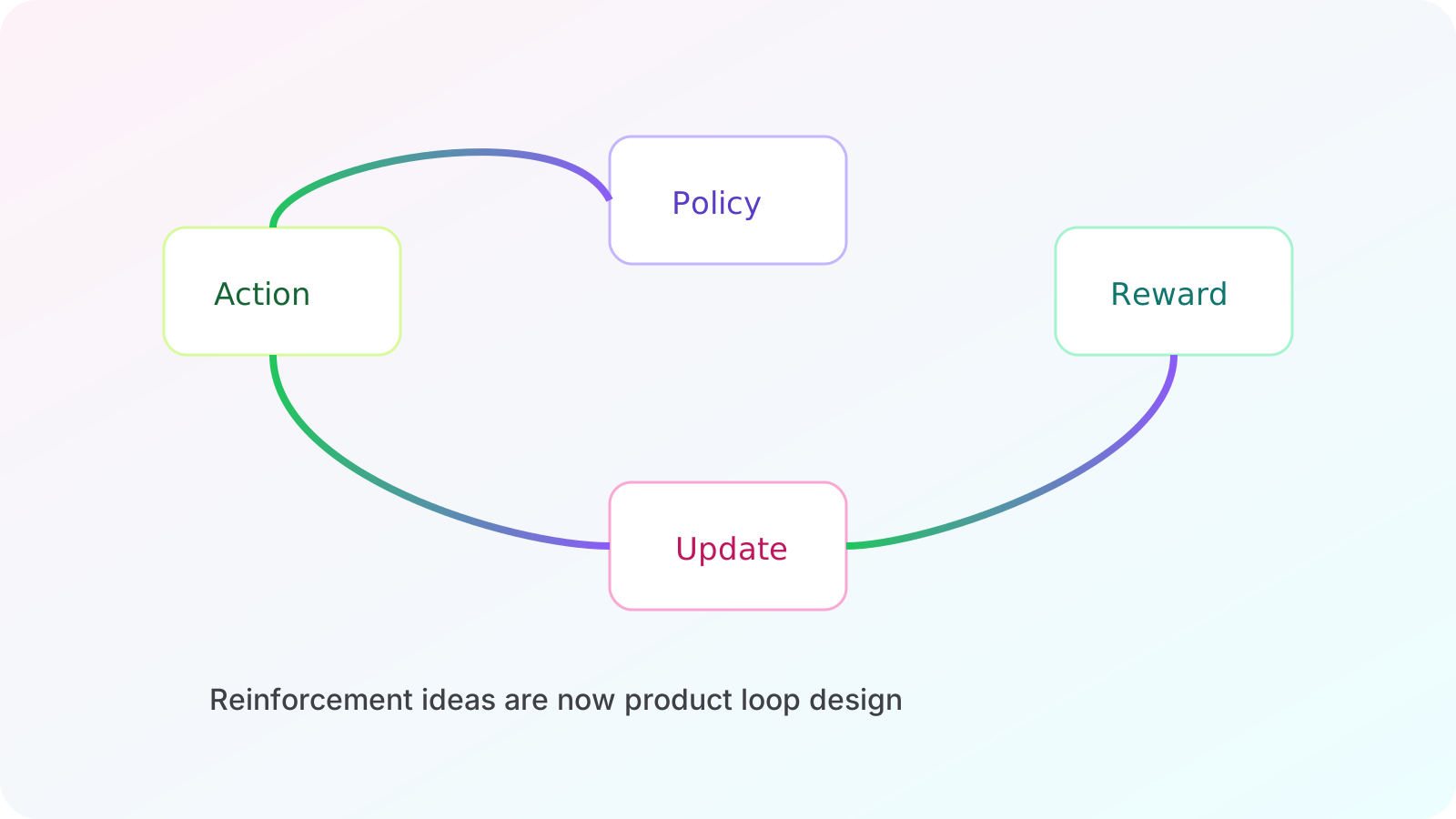
Reinforcement learning optimizes behavior through feedback loops:
- The model takes an action.
- The system receives a reward signal.
- The policy updates toward actions with better long-run reward.
In production products, the reward signal is rarely one number. It is a bundle of tradeoffs:
- task success,
- safety,
- latency,
- user trust,
- and cost.
Why RLHF mattered
RLHF (reinforcement learning from human feedback) helped close the gap between raw next-token prediction and useful assistant behavior.
A key historical marker was the InstructGPT work published in 2022, which showed large gains from human preference optimization. That pattern shaped mainstream assistant behavior through the GPT-3.5 and GPT-4 era.
Why this matters right now
In 2026, we are building systems that act, not just answer. That re-centers reinforcement thinking.
When systems can call tools, plan steps, and update memory, static quality checks are not enough. You need policy pressure on long-horizon outcomes, not one-turn outputs.
Product implications
If you are a PM, designer, or engineer, RL concepts are practical, not academic.
Use them to frame product choices:
| RL concept | Product translation |
|---|---|
| Reward function | What behavior does your product actually incentivize? |
| Exploration vs exploitation | How much novelty can users tolerate before trust drops? |
| Delayed reward | Does your system optimize first-turn polish or end-to-end task completion? |
| Policy constraints | What actions are disallowed even if they might boost short-term metrics? |
Common failure mode
Teams often optimize for immediate user delight signals and accidentally reward brittle behavior:
- overconfident responses,
- unnecessary verbosity,
- and “looks smart” formatting that hides weak reasoning.
That is a reward design bug.
My working stance
If you ship AI features, you are already designing reward systems, whether you admit it or not.
So be explicit:
- define desired behavior,
- define unacceptable behavior,
- instrument both,
- and iterate policy with evidence.
That is reinforcement thinking in product form.