Design Philosophy for AI Interfaces
A practical design stance: less UI noise, more user confidence, and better decisions under uncertainty.
- Design
- AI UX
- Product
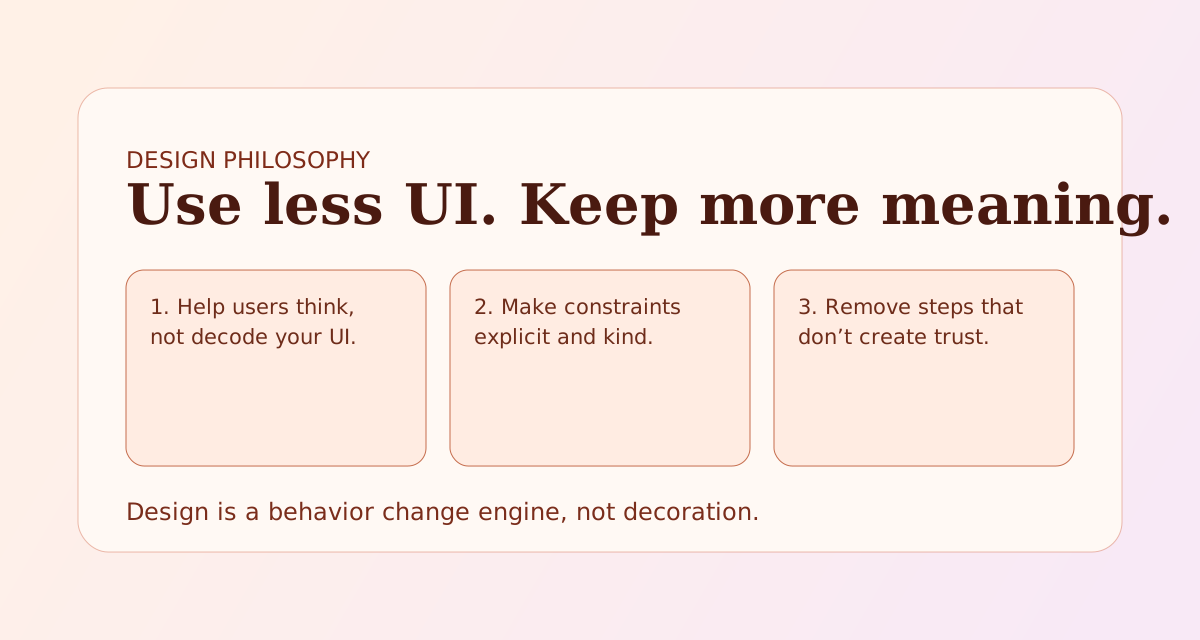
Most AI UX fails for one reason: we ask users to trust invisible decisions.
My design philosophy is straightforward:
- make intent visible
- make uncertainty legible
- make next steps obvious
Reduce cognitive tax
If users need to decode your interface before doing their task, you lost.
I design for:
- clear starting points
- constrained choice where helpful
- progressive disclosure for complexity
“Powerful” UX is often just compact confusion.
Show work when it matters
Not every output needs chain-of-thought style exposition. But users need enough to answer:
- Why did I get this?
- What assumptions were made?
- What can I do next?
That’s trust UX.
Constrain before you personalize
Teams rush to personalization early. Usually that’s backwards.
First build:
- stable core workflow
- high-confidence baseline behavior
- clear failure handling
Then add personalization with measured blast radius.
Design for refusal and ambiguity
AI products need intentional states for:
- missing context
- low confidence
- policy conflicts
- ambiguous user goals
If your only state is “answer,” quality will drift.
The visual layer should reinforce the interaction model
I care less about trendy components and more about behavioral semantics:
- confirmation moments
- confidence signals
- reversible actions
- clear ownership of final decisions
AI UX should feel calm, not performative.
A useful litmus test
After a session, can a user explain:
- what happened,
- why it happened,
- what to do next?
If yes, design is doing its job.