OpenAI vs Anthropic: Why This Rivalry Matters
This is not just model drama. It is a strategic split on product philosophy, safety posture, and developer lock-in.
- OpenAI
- Anthropic
- Strategy
- AI Platforms
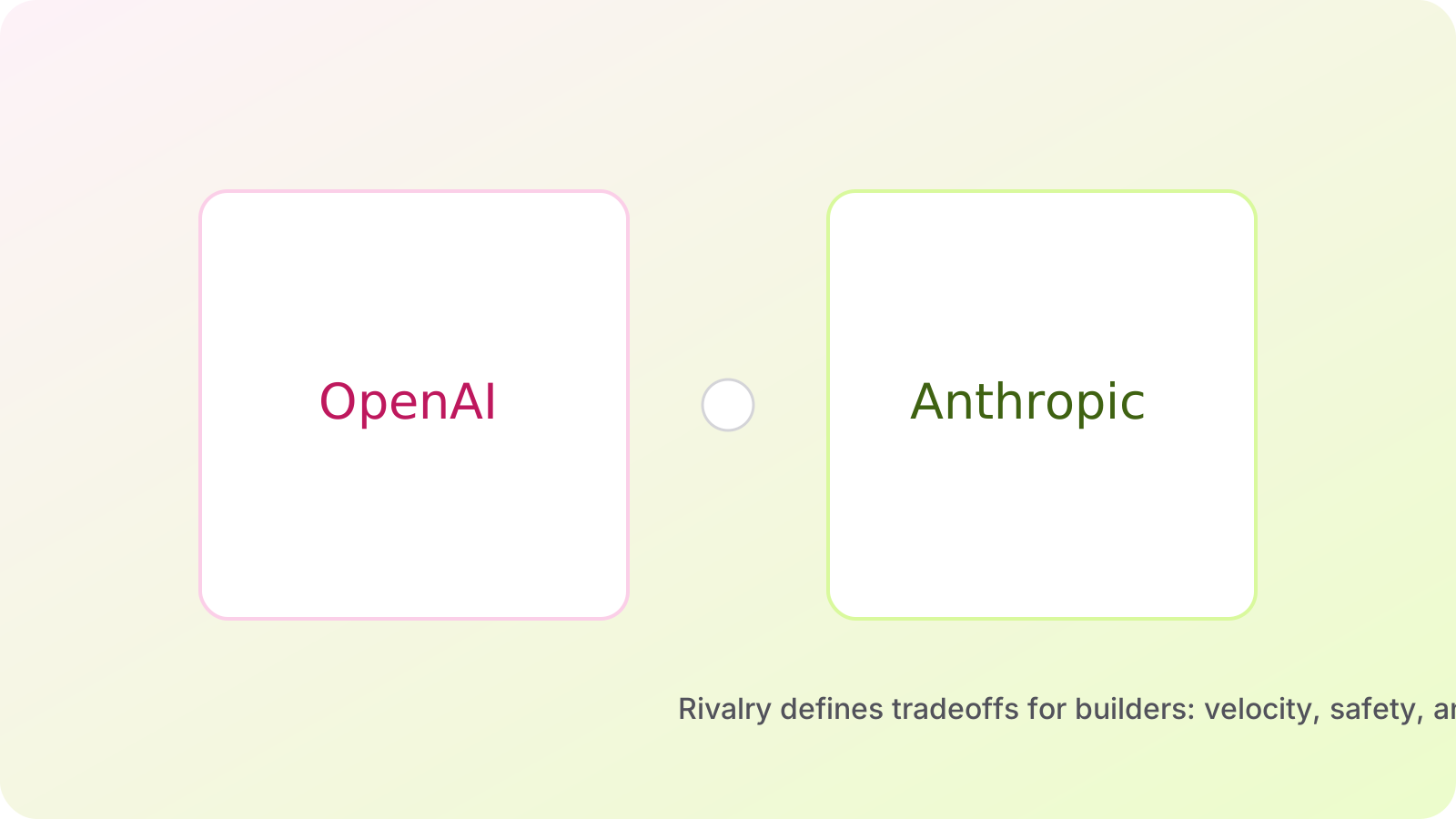
People frame OpenAI vs Anthropic as personality conflict or “beef.” That framing is shallow.
For builders, this rivalry matters because it encodes different product philosophies.
The real split
The useful way to see it:
- OpenAI tends to push integrated product + platform velocity.
- Anthropic tends to emphasize controlled behavior, constitutional framing, and policy legibility.
Both companies care about safety and capability. The difference is where each puts its product center of gravity.
Why you should care as a builder
Provider choice shapes more than output quality. It also shapes:
- how your team evaluates risk,
- how much vendor coupling you accept,
- and how quickly you can ship new interaction patterns.
Practical tradeoff map
| Decision area | OpenAI-leaning default | Anthropic-leaning default |
|---|---|---|
| Speed to launch | strong integrated tooling path | strong with more explicit policy framing |
| Safety communication | improving rapidly, product-driven | core part of narrative and docs |
| Integration style | unified stack convenience | composable, policy-aware integrations |
| Team mindset induced | move-first with guardrails | constraint-first with clear boundaries |
Neither column is universally better. It depends on your product risk profile.
The hidden risk: accidental lock-in
The biggest failure mode I see is not picking the “wrong” provider. It is hard-coding provider-specific assumptions into your product semantics.
Examples:
- prompts tightly coupled to one model’s response quirks,
- tool schemas that assume one API behavior,
- policy logic embedded in provider-specific moderation outputs.
Those choices become expensive later.
A better posture
Compete on your product, not your provider allegiance.
I recommend:
- common interface contracts for prompts and tools,
- provider-agnostic eval suites,
- canary routing across at least two providers,
- periodic migration drills.
If you can switch providers in one sprint, you have strategic leverage. If not, your roadmap is partially outsourced.
Bottom line
OpenAI vs Anthropic is important, but not for gossip reasons. It matters because their strategic differences force builders to be explicit about speed, safety, and dependency risk.
That clarity is good for product quality.