Philosophy of Bonzen
Why Bonzen is designed as a behavior loop system, not a content library: relevance, recovery, and repeat value.
- Bonzen
- Behavior Design
- Product Philosophy
Bonzen is built on one product belief: behavior change comes from context-sensitive loops, not static content catalogs.
Most wellness and coaching products optimize for content volume. More lessons, more prompts, more tips. That can look rich on paper and still fail in daily life. Users usually do not need more information in the moment they are stuck. They need a clear next action they can trust.
Core stance
- Relevance beats volume.
- Recovery beats perfection.
- Repeatability beats novelty.
Why this framing matters
Behavior support happens under stress, fatigue, and context switching. In those moments, long content libraries become cognitive overhead.
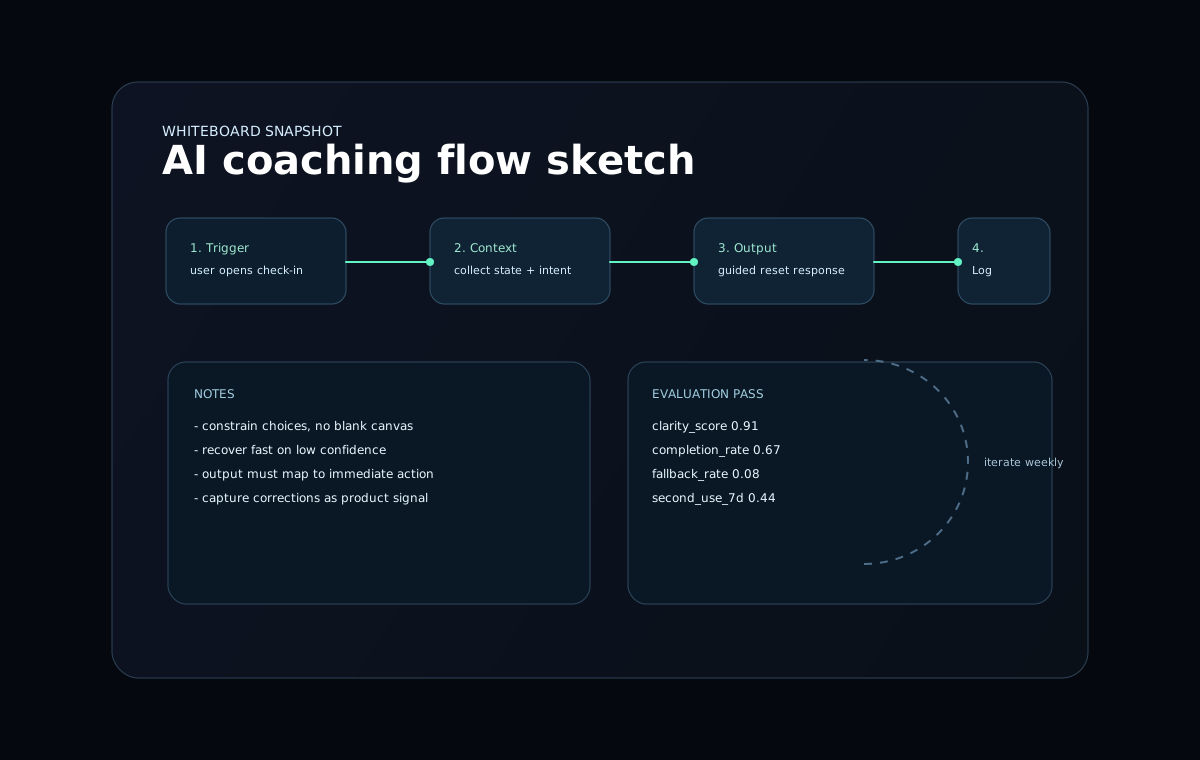
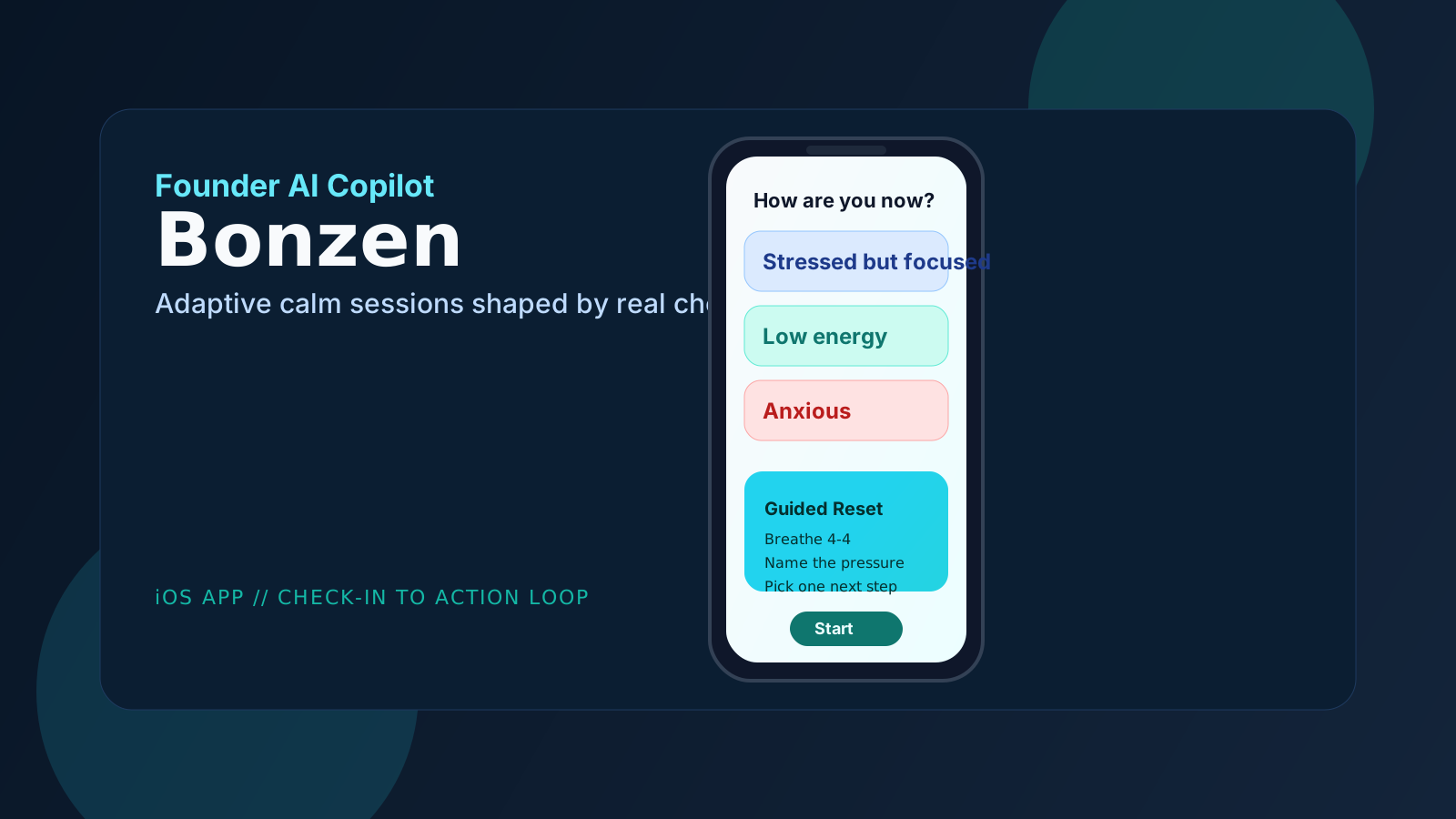
Bonzen treats each interaction as a compact loop: check-in, reset, reflection, next step. The system is designed to reduce friction between “I feel off” and “I know what to do next.”
Product consequence
Bonzen emphasizes:
- short, guided loops over open-ended browsing
- constrained prompts that map to actionable outcomes
- reflection mechanisms that reinforce pattern awareness
- low-penalty re-entry when routines break
This is why the product can feel calm and direct instead of content-heavy.
Philosophy of support
A behavioral product should not perform care; it should improve decisions.
The practical benchmark is simple: after using the product, does the user take a better next action than they would have otherwise? If not, surface-level engagement metrics are noise.
Bottom line
Bonzen is designed as a behavior engine, not an inspiration feed.
If a product cannot support users through disruption and restart, it is not a serious behavior tool. Bonzen’s focus on relevance, recovery, and repeat loops is meant to solve exactly that.
Best,
Oli
November 3, 2025