Oli Cheng 1 min read Strategy Updated Feb 16, 2025
AI Product Strategy: Ship Weekly Without Breaking Trust
A practical operating system for moving fast on AI features while preserving user confidence.
- AI Product
- Execution
- Trust
Shipping weekly on AI products is less about model quality and more about decision quality.
Most teams treat trust as a legal or policy checkbox. In practice, trust is an interaction loop. Users trust systems that are predictable, explainable, and recoverable when wrong.
The trust loop
I structure weekly releases around four checkpoints:
| Checkpoint | Question | Owner |
|---|---|---|
| Intent | Does the product explain what the AI is doing? | Product |
| Boundaries | Can users see constraints and fallback behavior? | Design |
| Recovery | Is there an obvious path to correct bad output? | Engineering |
| Learning | Are we capturing failures as training signal? | PM + Data |
Why this works
This loop forces clarity before launch and creates structured feedback after launch.
const releaseGate = {
  clarity: scoreIntentUI(feature),
  reliability: evaluateFailureRate(feature),
  recoverability: hasFallbackAndUndo(feature),
  learning: capturesUserCorrections(feature)
};

if (Object.values(releaseGate).every(Boolean)) {
  deploy(feature);
}
Metrics that matter in week one
Track these early indicators before revenue metrics:
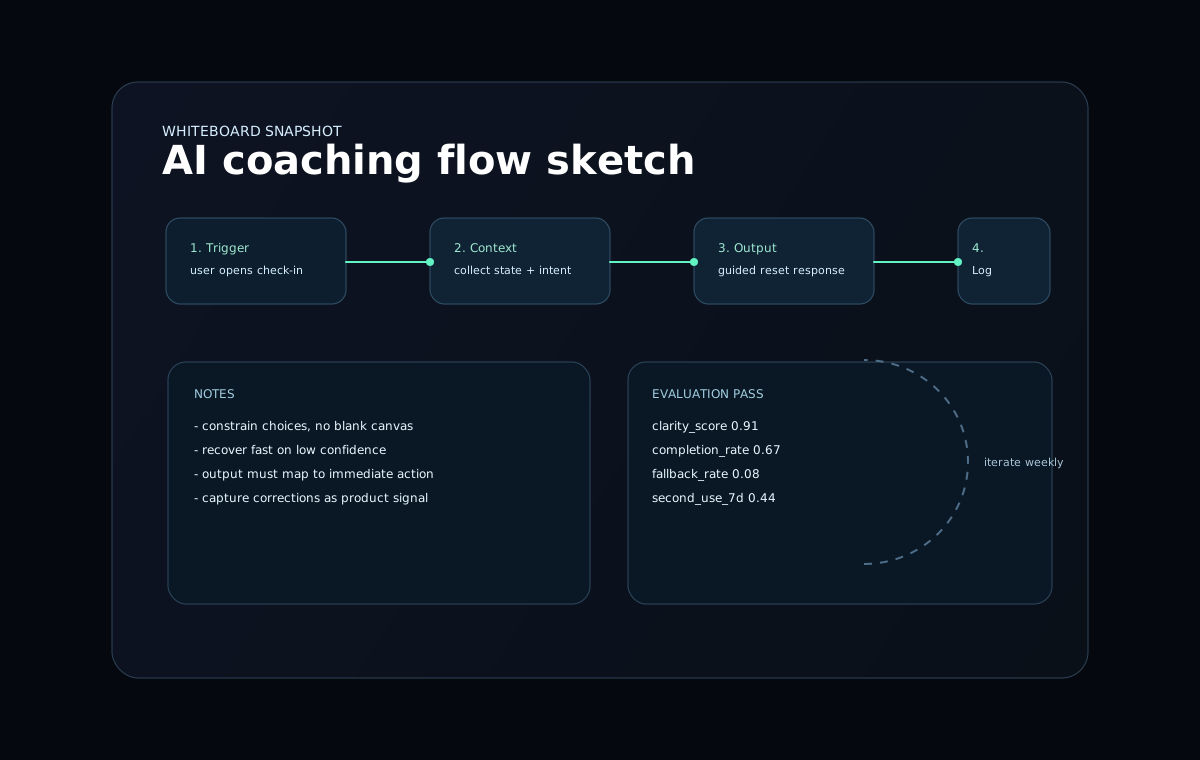
- Completion rate in AI-assisted flows
- User corrections per successful task
- Repeat usage within 7 days
- Escalation rate to human/manual workflow
Practical takeaway
Speed is still the advantage. The teams that win do not slow down for trust, they design trust directly into the ship cycle.