Why Most AI Features Fail Adoption (and the Activation Metric That Matters)
A framework for measuring whether AI features deliver repeat value instead of one-time novelty.
- Metrics
- Adoption
- Product Strategy
Many teams celebrate first-use events: user clicks the AI button, generates output, shares a screenshot, and maybe drops a “this is cool” comment.
Those are curiosity signals, not adoption signals.
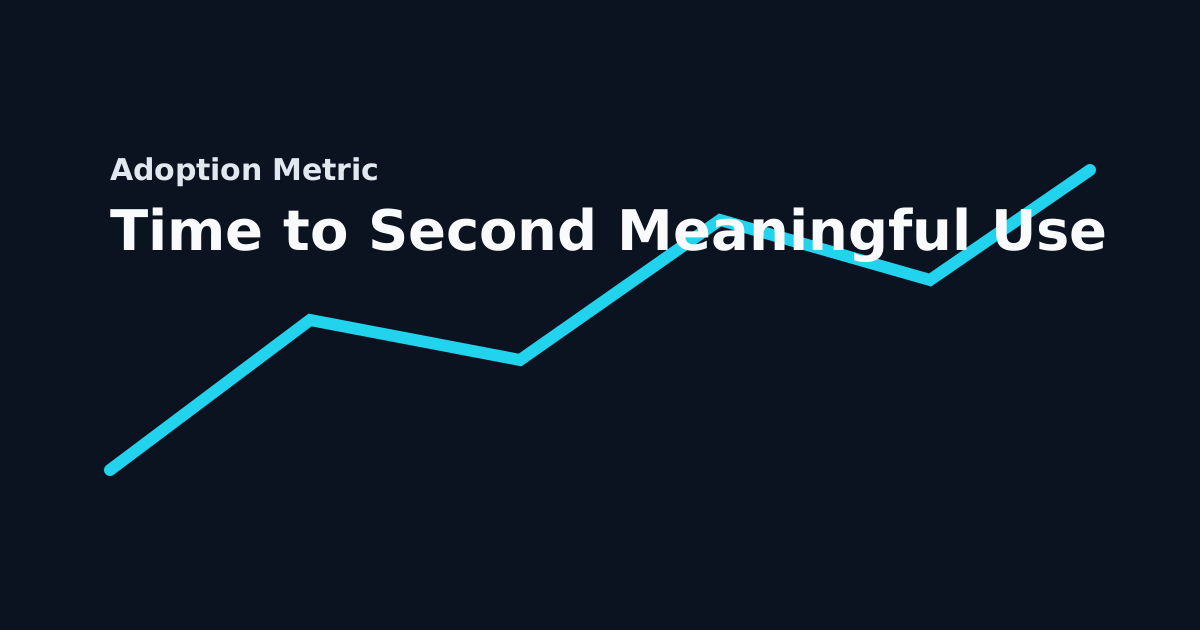
If you want to know whether an AI feature actually sticks, track time-to-second-meaningful-use.
Why second use matters
First use is often driven by novelty. Second use indicates the feature solved a real problem well enough that the user came back under normal conditions.
That is the transition from exploration to utility.
Example scoring rubric
| Event | Counts as meaningful use? |
|---|---|
| Clicked “Generate” | No |
| Edited and accepted output | Yes |
| Reused AI output in a core workflow | Yes |
| Shared generated content without edits | Usually no |
Your rubric should reflect the job-to-be-done, not vanity interaction counts.
Instrumentation checklist
- Define the job the feature is supposed to improve.
- Define what a meaningful completion loop looks like.
- Log first and second completion timestamps.
- Track median time between those events by segment.
Without segmentation, the metric can hide where value exists and where it fails.
What to do if the metric is weak
- reduce setup friction before first output
- improve reliability for top two use cases
- add context-specific examples
- improve handoff from AI output into core workflow
Do not immediately add more model complexity. Most adoption problems are interaction and workflow problems.
Bottom line
Strong AI products create repeated utility, not one-off surprise.
Time-to-second-meaningful-use gives you an early, practical read on whether your feature is becoming part of user behavior or remaining a demo trick.
Best,
Oli
March 21, 2025