AI Product Strategy: Ship Weekly Without Breaking Trust
A practical operating system for moving fast on AI features while preserving user confidence.
- AI Product
- Execution
- Trust
Shipping weekly on AI products is less about model quality and more about decision quality.
Most teams treat trust as a legal or policy checkbox. In practice, trust is an interaction loop. Users trust systems that are predictable, explainable, and recoverable when wrong.
The trust loop
I structure weekly releases around four checkpoints:
| Checkpoint | Question | Owner |
|---|---|---|
| Intent | Does the product explain what the AI is doing? | Product |
| Boundaries | Can users see constraints and fallback behavior? | Design |
| Recovery | Is there an obvious path to correct bad output? | Engineering |
| Learning | Are we capturing failures as training signal? | PM + Data |
Where teams accumulate trust debt
Trust debt usually grows in invisible places:
- silent model changes with no UX notice
- unclear confidence when output quality drops
- dead-end error states that force user re-entry
- ambiguous ownership of the final decision
Users can tolerate occasional errors. They do not tolerate uncertainty about how to recover.
Why this works
This loop forces clarity before launch and creates structured feedback after launch.
const releaseGate = {
  clarity: scoreIntentUI(feature),
  reliability: evaluateFailureRate(feature),
  recoverability: hasFallbackAndUndo(feature),
  learning: capturesUserCorrections(feature)
};

if (Object.values(releaseGate).every(Boolean)) {
  deploy(feature);
}
Metrics that matter in week one
Track these early indicators before revenue metrics:
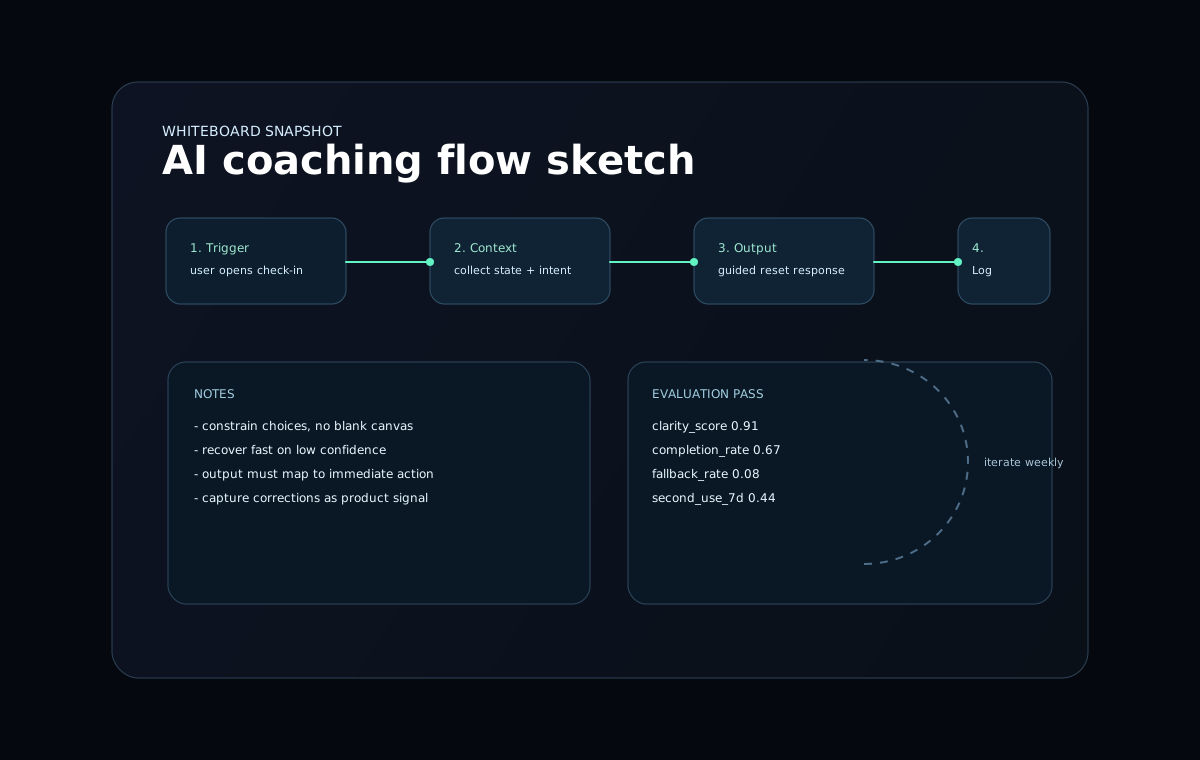
- Completion rate in AI-assisted flows
- User corrections per successful task
- Repeat usage within 7 days
- Escalation rate to human/manual workflow
Practical takeaway
Speed is still the advantage. The teams that win do not slow down for trust, they design trust directly into the ship cycle.
The practical test is simple: can a first-time user and a skeptical reviewer both explain what the system does, where it might fail, and how to recover? If the answer is yes, trust is operational. If not, release faster does not help.
Best,
Oli
February 10, 2025