The Team of 3: Designer + PM + Engineer
A compact operating model for shipping AI products without handoff theater or role confusion.
- Team Design
- Product
- Execution
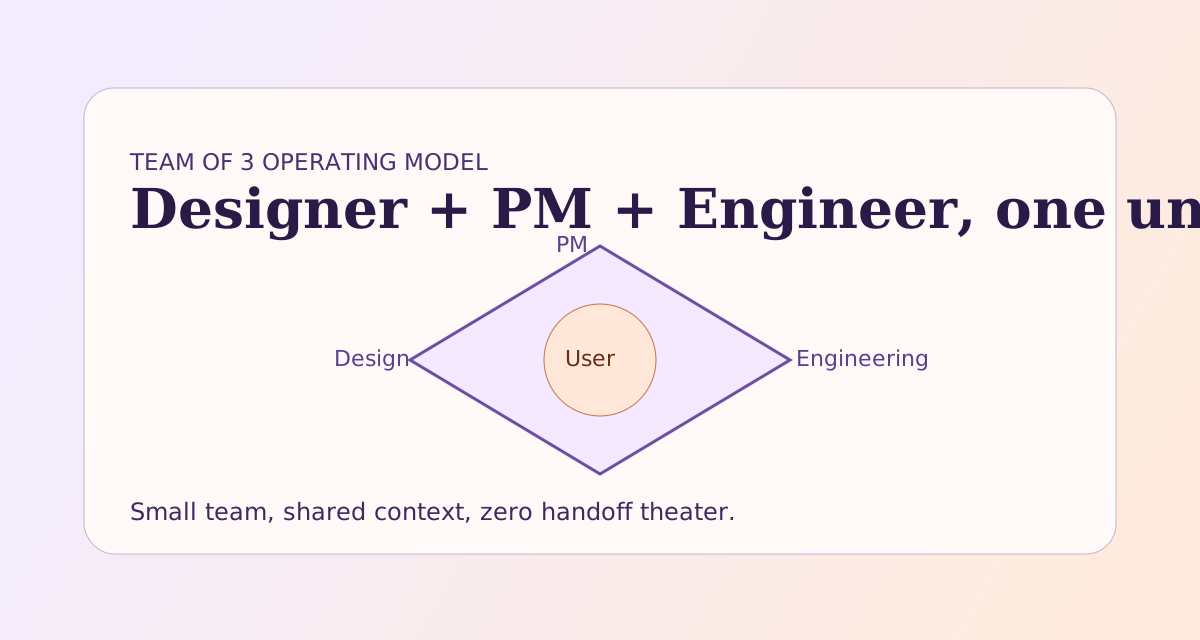
If I could choose one default unit for 0->1 AI product work, it’s this:
- one product designer
- one product manager
- one engineer
Not because bigger teams are bad. Because this shape keeps decision latency low.
Why it works
A strong trio can cover:
- problem framing
- UX and behavior design
- technical feasibility and implementation
- launch instrumentation
The key is shared context, not ticket passing.
Responsibility split (practical)
- PM: problem clarity, scope boundaries, tradeoffs
- Designer: interaction quality, trust UX, failure states
- Engineer: architecture, reliability, observability
Everyone still participates in product decisions. No “throwing work over the wall.”
Operating rituals that actually help
- 30-minute scope lock before each sprint
- Mid-sprint quality checkpoint on real outputs
- End-of-sprint learning memo (not just demo)
The memo should answer:
- what we learned
- what changed in our assumptions
- what we’ll do next
Where trios fail
- PM becomes project coordinator only
- Design gets pulled in too late
- Engineering is treated as execution-only
When that happens, quality drops and cycle time paradoxically gets worse.
My preferred decision principle
“Closest to the problem decides, team validates fast.”
This avoids consensus gridlock while keeping quality bar high.
Scaling beyond 3
I scale by cloning high-context trios around clear domains, then adding a small alignment layer.
I do not scale by adding layers of handoff and meeting debt.
Small teams can ship serious products when the operating model is crisp.