Philosophy of ShipDojo
ShipDojo is built on execution realism: move from prototype optimism to production evidence with explicit gates.
- ShipDojo
- Execution
- Quality Systems
ShipDojo exists because most AI products die in the handoff between a convincing demo and real production use.
The prototype phase rewards fluency. You can demo a clean happy-path flow in one meeting, and everyone feels momentum. Production rewards something else entirely: failure handling, consistency over long sessions, and clarity about who owns the final decision when the model is wrong. That gap is where teams lose months.
Core stance
- “Looks done” is not “is shippable.”
- Quality has to be inspectable, not implied.
- Human approval still matters at high-risk boundaries.
Why this framing matters
A lot of teams treat quality as a post-build audit. In AI products, that is too late. The core interaction itself can produce variable outputs, so quality has to be designed into the loop from day one.
The practical shift is to ask: what evidence would make a skeptical reviewer confident this feature can run in front of real users? If you cannot answer that question with concrete checks, you are still in prototype mode.
Product consequence
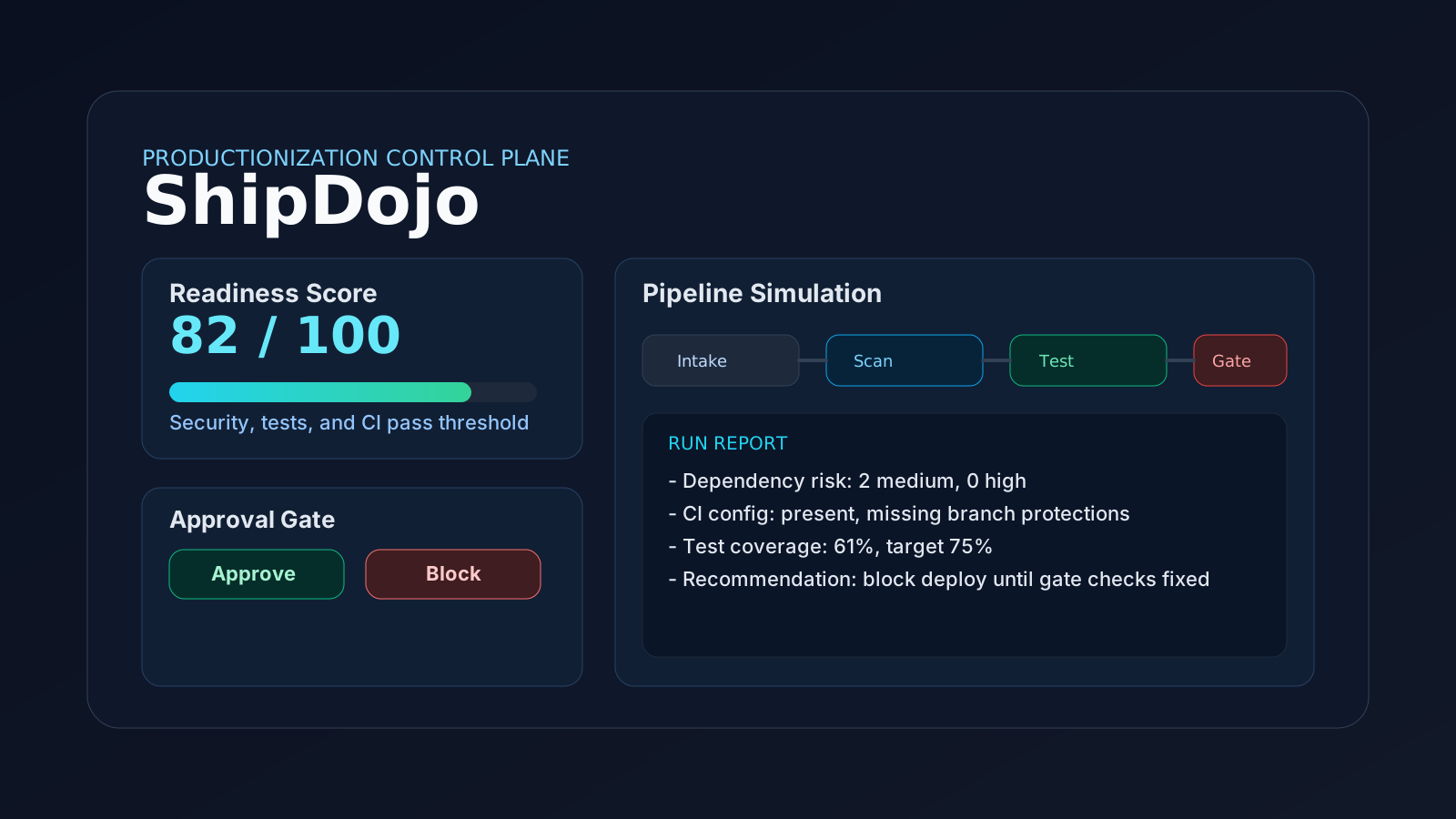
ShipDojo frames readiness as visible evidence:
- known failure patterns and response behavior
- explicit launch gates instead of vibes
- logged risk notes and owner assignment
- simulation runs before public rollout
That design forces harder conversations early, but it shortens the path to reliable release.
What ShipDojo rejects
ShipDojo is intentionally opinionated against two habits:
- Shipping by charisma: a strong demo is not a strong system.
- Hiding risk in Slack threads: unresolved risks must be first-class artifacts.
Bottom line
The point is not to slow teams down. The point is to convert fuzzy confidence into auditable confidence.
When teams adopt this posture, they stop debating whether a feature feels ready and start proving whether it behaves ready. That is the mindset shift from AI theater to AI operations.
Best,
Oli
December 12, 2025