Philosophy of Divine Machine
Divine Machine treats AI as a ritual interface: deterministic internals, interpreted meaning, and epistemic humility.
- Divine Machine
- AI Philosophy
- Interpretation
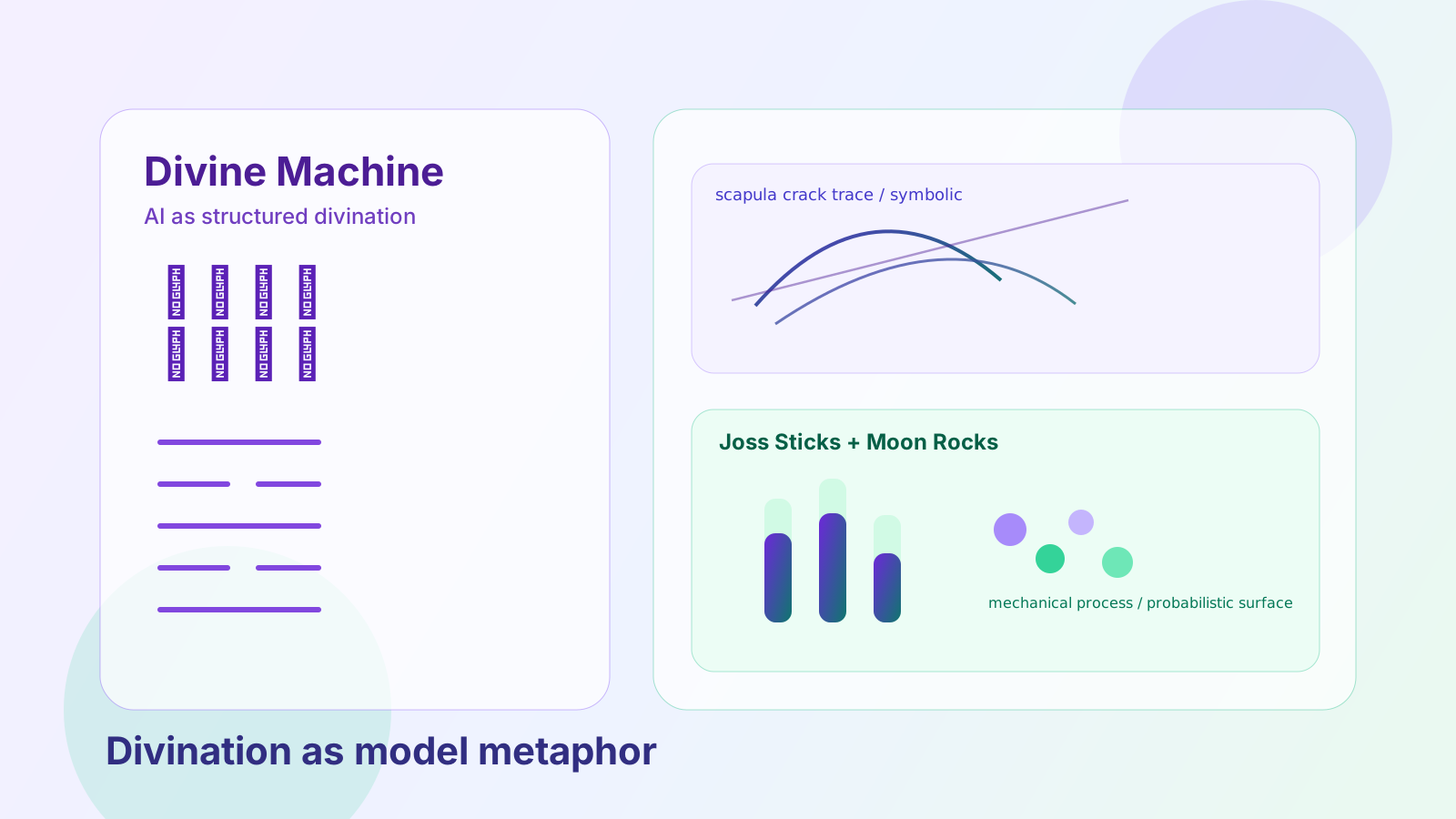
Divine Machine is an art interface built around a central AI tension: mechanical generation can still feel oracular in lived experience.
The project combines fu ji / 机-inspired framing, trigram logic, scapula crack simulation, and fortune-stick style draws with explicit system mechanics. That duality is intentional. I want users to hold both truths at once: this is deterministic computation, and this still activates human interpretation.
Core stance
- Determinism and mystery can coexist phenomenologically.
- Interpretation is a user action, not a model property.
- Responsible language matters when systems feel agentic.
Why this framing matters
Most AI debates get trapped in binaries: either “just statistics” or “almost conscious.” In real use, people interact in between those extremes. They project meaning onto outputs while knowing a machine produced them.
Divine Machine makes that cognitive move visible instead of hiding it.
Product consequence
The app exposes seed logic and method structure while preserving ritual texture:
- visible procedural generation under each cast
- method-level explainers for history and math framing
- symbolic output surfaces for reflective interpretation
You can inspect the mechanism and still experience the reading.
Mathematical lens
Each method in the app maps to a constrained possibility space:
- stick draws as discrete lotteries
- block or token casts as binary or small-state branching
- crack generation as seeded stochastic geometry
- trigrams as compact symbolic encodings
None of this is supernatural in implementation. But it is still meaningful as a human interface for reflection, because meaning is assigned through interpretation, not emitted by magic.
Bottom line
Divine Machine is not claiming that models are prophets. It is showing why they can feel prophetic.
When we treat AI as a ritual mirror rather than an oracle authority, we preserve curiosity without surrendering epistemic discipline. That posture is more honest, and safer, for both art and product work.
Best,
Oli
November 24, 2025