Philosophy of Family Tapestry
Family Tapestry treats lineage as living structure: editable graphs, narrative memory, and relational nuance.
- Family Tapestry
- Graph UX
- Memory
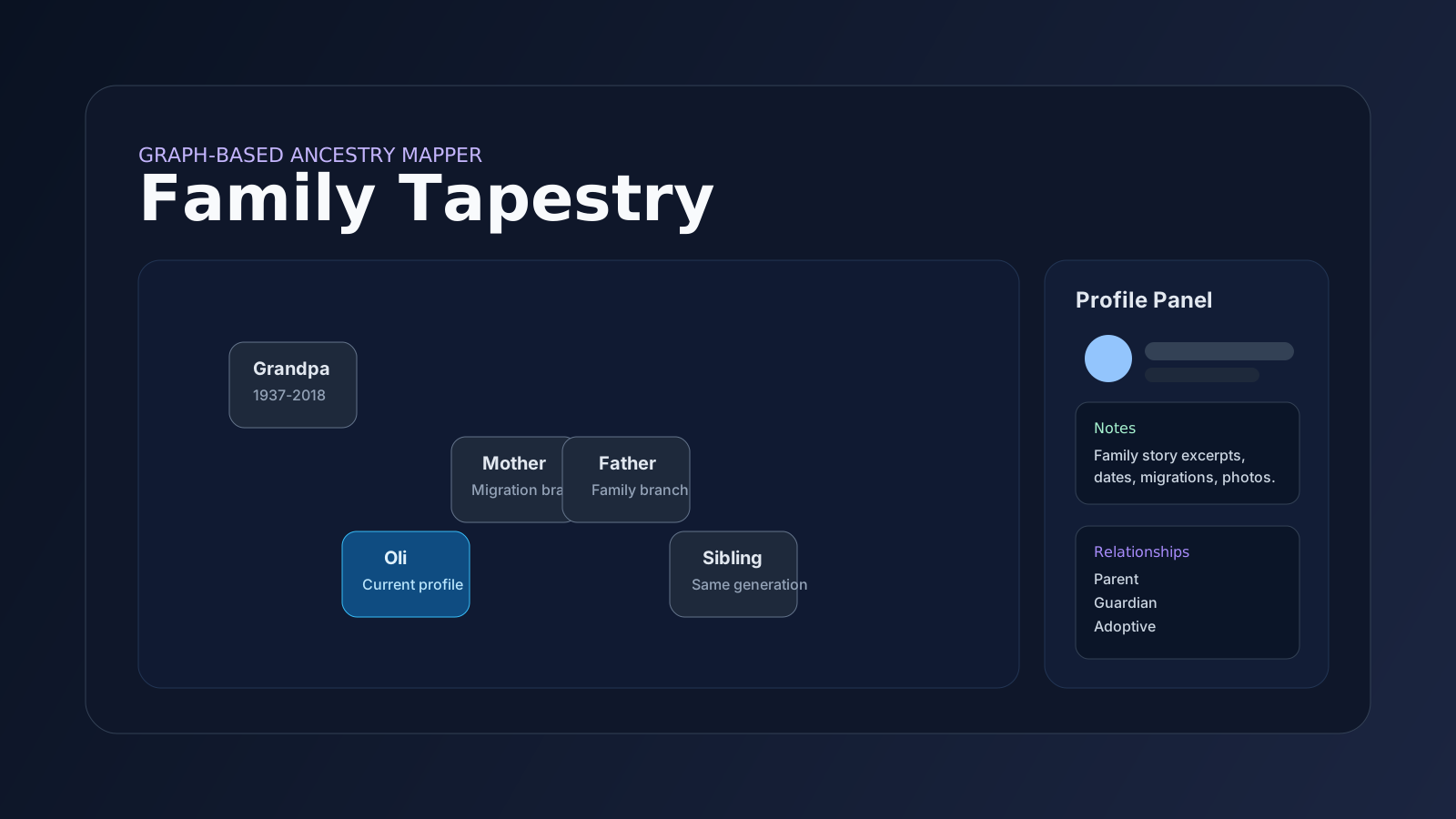
Family Tapestry starts from a structural belief: family history is not a static chart, it is an evolving relational map.
Traditional family-tree products assume a narrow model of kinship and a single truth timeline. Real families are messier: migration, adoption, blended households, social parents, contested memory, language shifts, and records that conflict.
Core stance
- Family structure is plural and non-linear.
- Interfaces should hold narrative context, not only nodes and edges.
- Privacy controls are part of dignity, not optional toggles.
Why this framing matters
When tools force rigid templates, they erase important context. People end up choosing between factual structure and emotional truth. A better system should support both.
Family Tapestry treats identity and relationship data as layered: official record, oral history, and personal notes can coexist without pretending they are the same type of claim.
Product consequence
The system prioritizes:
- flexible graph editing for non-standard structures
- profile depth for stories, artifacts, and uncertainty notes
- permission boundaries so sensitive details stay controlled
- reversible edits for collaborative correction over time
This makes the product useful for memory stewardship, not just diagram generation.
Design ethics
Genealogy tools can accidentally become extraction tools if they optimize growth over care. Family data is intimate and intergenerational.
That is why Family Tapestry treats consent and selective visibility as first-order interaction design. Good defaults should reduce accidental exposure, especially in multi-branch collaborative trees.
Bottom line
Family Tapestry is about representing kinship with enough nuance to feel true.
A family map should not flatten complexity to make software happy. Software should flex to match human reality. When the representation respects that reality, people are more willing to contribute, correct, and preserve shared memory across generations.
Best,
Oli
January 5, 2026