Why Constrained AI UX Beats Open Chat in Product Workflows
Open-ended chat feels flexible, but constrained interfaces usually produce better outcomes for real users.
- UX
- AI Product
- Guardrails

A blank chat box signals freedom, but in production workflows it usually transfers design effort from the product team to the user.
When users open a business workflow, they are not asking for maximum expressive range. They are asking for a reliable path to a useful outcome. Open chat often fails that requirement because prompt quality, context framing, and output parsing are all pushed onto the person who just wants to complete a task.
Constrained does not mean rigid
Good constraints are scaffolding. They reduce ambiguity while preserving control.
Examples that consistently improve outcomes:
- intent buttons instead of empty-input paralysis
- structured output cards instead of unbounded paragraphs
- explicit confidence and fallback actions when quality drops
This is not anti-chat ideology. It is interaction economics.
Why constrained flows win in product settings
In repeated workflows, users value three things:
- predictable output shape
- lower decision fatigue
- easier recovery when output is wrong
Constrained interfaces improve all three. They make success states visible and failure states repairable.
Quick comparison
| Pattern | User effort | Typical output quality | Error recovery |
|---|---|---|---|
| Open chat | High | Inconsistent | Weak |
| Constrained flow | Lower | More reliable | Strong |
Practical implementation rule
Start constrained, then selectively open where real usage proves flexibility is needed.
A good progression looks like this:
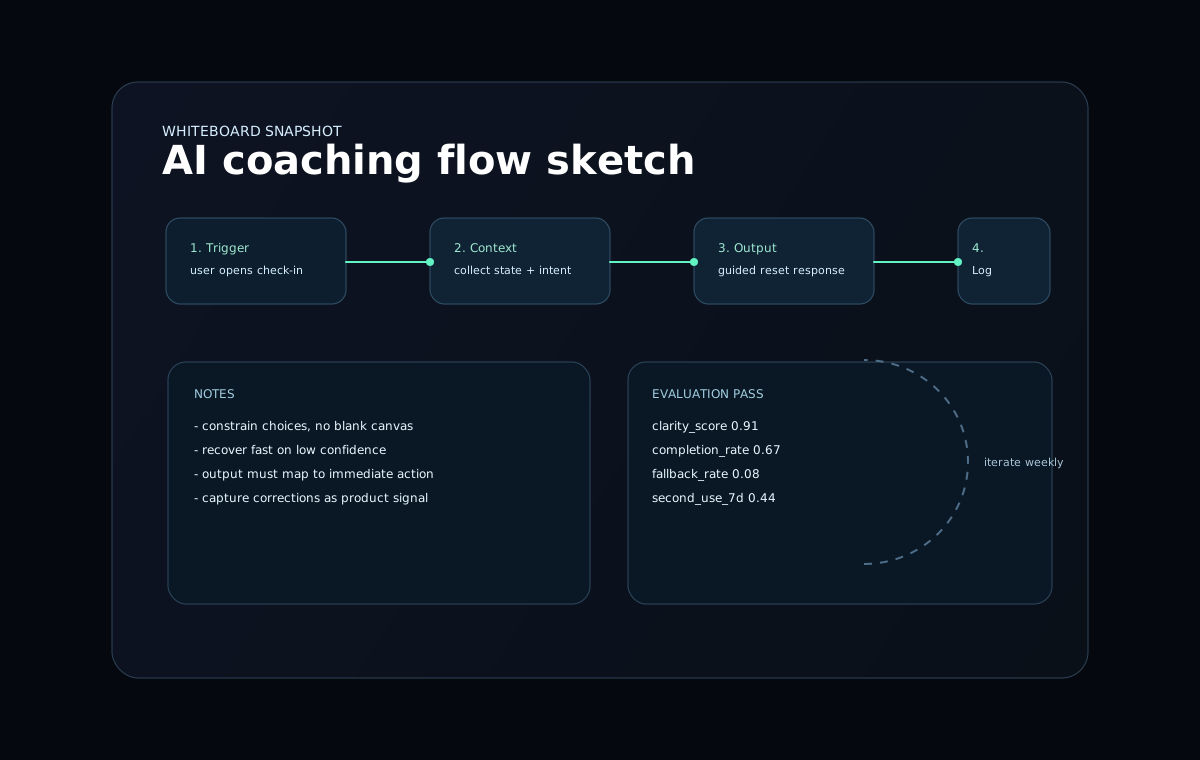
- Launch a narrow flow for one high-value job.
- Instrument completion, correction, and repeat use.
- Expand only where users repeatedly hit true boundary conditions.
That sequence prevents interface entropy.
Common objection
“Constrained UI kills creativity.”
In most enterprise and productivity contexts, the opposite is true. Constraints protect cognitive budget so users can spend creativity on domain judgment, not on formatting prompts.
Bottom line
Open chat is a great exploration surface. It is usually a weak default for operational workflows.
If you care about adoption, trust, and measurable outcomes, design the constraint model first. Then layer flexible inputs where evidence demands it. That is how AI UX graduates from demo novelty to daily utility.
Best,
Oli
August 22, 2025